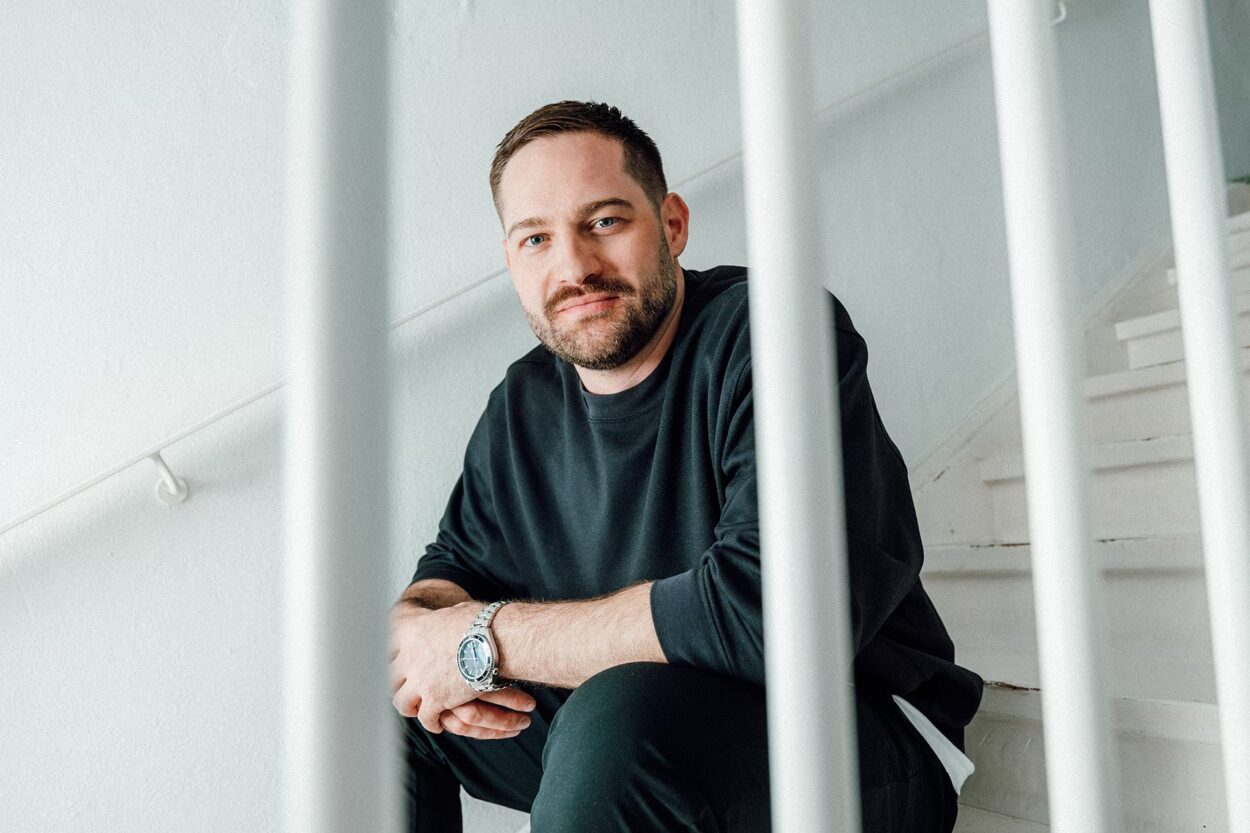
You’re Australian in Vienna. How did that happen – and what made you stay?
Vienna wasn’t really the plan—I ran out of money somewhere between China and the ‘stans and hitchhiked my way here. Crashed on a friend’s couch, realised there was no English-language publication for internationals, so I started Vienna Würstelstand. It picked up quickly—and somehow, I ended up building a life out of it.
„It’s the same thing, really – understand who you’re talking to, strip it back, and say it in a way that actually lands…not just heard, but felt.“
What was the first moment you thought: I actually understand this city?
Vienna still surprises me – it’s that moment when you realise the same “Passt scho” shrug somehow exists alongside a quiet obsession with rules, and no one sees the contradiction. But when you do, the city and its people make sense.
And what still doesn’t make sense to you?
Austrians tend to wear skepticism and complaining like a personality trait—and it quietly kills momentum. If your default setting is that nothing really changes and everything is “Scheisse,” you start doubting whether you can change anything yourself. There’s a lot of damn talented people here not living out that talent for this reason.
You’re a journalist and an advertiser. Are those two different jobs or fundamentally the same thing?
It’s the same thing, really – understand who you’re talking to, strip it back, and say it in a way that actually lands…not just heard, but felt.
Where does it come from – the writing, the storytelling, the curiosity about people? Was it always there?
I learned empathy as a kid out of necessity – trying to understand why people are the way they are and what’s really going on beneath the surface. Over time, that shifted into a kind of curiosity I couldn’t switch off. It’s what drew me into writing and storytelling, and it continues to shape how I connect with people – by looking beyond the obvious and understanding what’s actually driving them.
You ended up building a career here. What did you have to figure out about this city before that was even possible?
Honestly, shit—that’s a hard question. I didn’t really sit there and plan it out, I kind of just threw myself into the moving car and figured it out on the way. What I’ve definitely learned, though, is that as an entrepreneur in Vienna, you’re pretty much on your own. With all the costs and how things are set up, it’s not exactly a business-friendly place. Not sure if that fully answers it, but that’s been the clearest thing I’ve figured out from building something here.
You describe yourself as a journalist and an advertiser. How did those two things come together in your life?
I would never describe myself as an advertiser. I’d describe myself as a journalist that fell into marketing because a. I realised I’m good at it, b. I lost my faith in the impact of journalism, c. you can make money in marketing but in journalism – not so much.
„You’ve got to be as loyal to your audience as they are to you.“
The Wurst Agency started as something else – PowBangBoom – before it became what it is today. What changed, and why?
Just the name. The name Pow Bang Boom sucked.
The agency grew out of Vienna Würstelstand, not the other way around. Can you tell us what Vienna Würstelstand actually is, for people who don’t know it?
It used to be an online magazine – back when people actually read those things. Now it’s a media platform for news, insider info, and community for people not born here. We’ve only just come back from the dead after Covid, but this time with a clearer purpose: using media to actually build real community around people who need it.
„Every single person in your community is earned, and you have to fight to keep them.“
What has it survived that others haven’t – and why do you think that is?
It’s lasted this long for a mix of reasons: a slightly insane, stubborn owner who refuses to let it die, people behind it who actually believe it has real value for the community, and the fact that it had an agency attached that could financially carry it through the tougher periods—like Covid.

What did running a magazine teach you about audiences that you couldn’t have learned any other way?
You’ve got to be as loyal to your audience as they are to you. Deliver the goods, consistently, and don’t bullshit them—because they’ll leave. Every single person in your community is earned, and you have to fight to keep them. If what you’re doing actually matters, it turns into a conversation, not just a platform. Same goes for marketing—people forget it’s not just shouting “look at this,” it’s actually listening.
„It was when I started meeting people IRL and they told me Vienna Würstelstand had actually helped them-and made them feel less alone.“
What can an agency that came from a media project do better than a traditional one – and what does it still have to prove?
I wouldn’t say it’s better at anything, but when you come from a background where you have to fight for attention with every headline, it naturally sharpens how you think about campaigns and social content.
The podcast with Gabriel came out of that world too – deliberately bilingual, you in English, him in German. What were you actually trying to do with that?
Honestly – have a laugh. Haha. I started it as a project to keep me sane during a intense period for the company. And it grew into something by accident. I think now we really just want to help people find a laugh amongst it all – especially during the times we’re living in.
What do you get out of sitting in front of a microphone every week that you don’t get anywhere else?
The best way I can put it is that a camera makes you feel like the main character, whereas a mic doesn’t—it puts you more in observer mode. With podcasts, you get the space to think out loud and actually process things while recording, which makes it feel more natural.
And then there’s the bigger thread running through all of it – communities. When did you realize that was actually what you were doing, and had been doing all along?
It was when I started meeting people IRL and they told me Vienna Würstelstand had actually helped them-and made them feel less alone. That’s when it stopped being just a thing I was doing and became a choice: to use media to help people feel that way.
AI is changing how content gets made. Does that make your life easier, or does it threaten exactly the thing that makes your approach work?
At this point in time, it definitely makes life easier—but it’s already coming for a lot of junior jobs in journalism and marketing. I think we’re going to miss that messy phase of training up young, eager grads and letting them figure things out.
Thanks for the interview, Jacob!
More about The Wurst Agency.